
Local · 22 October 2026 · 5 min read
Solar on rural blocks in Gisborne South and Toolern Vale
Sheds, ground mounts, long cable runs and two possible networks. What to think about before putting solar on a grid-connected rural property.
By Michael John, Central Solar
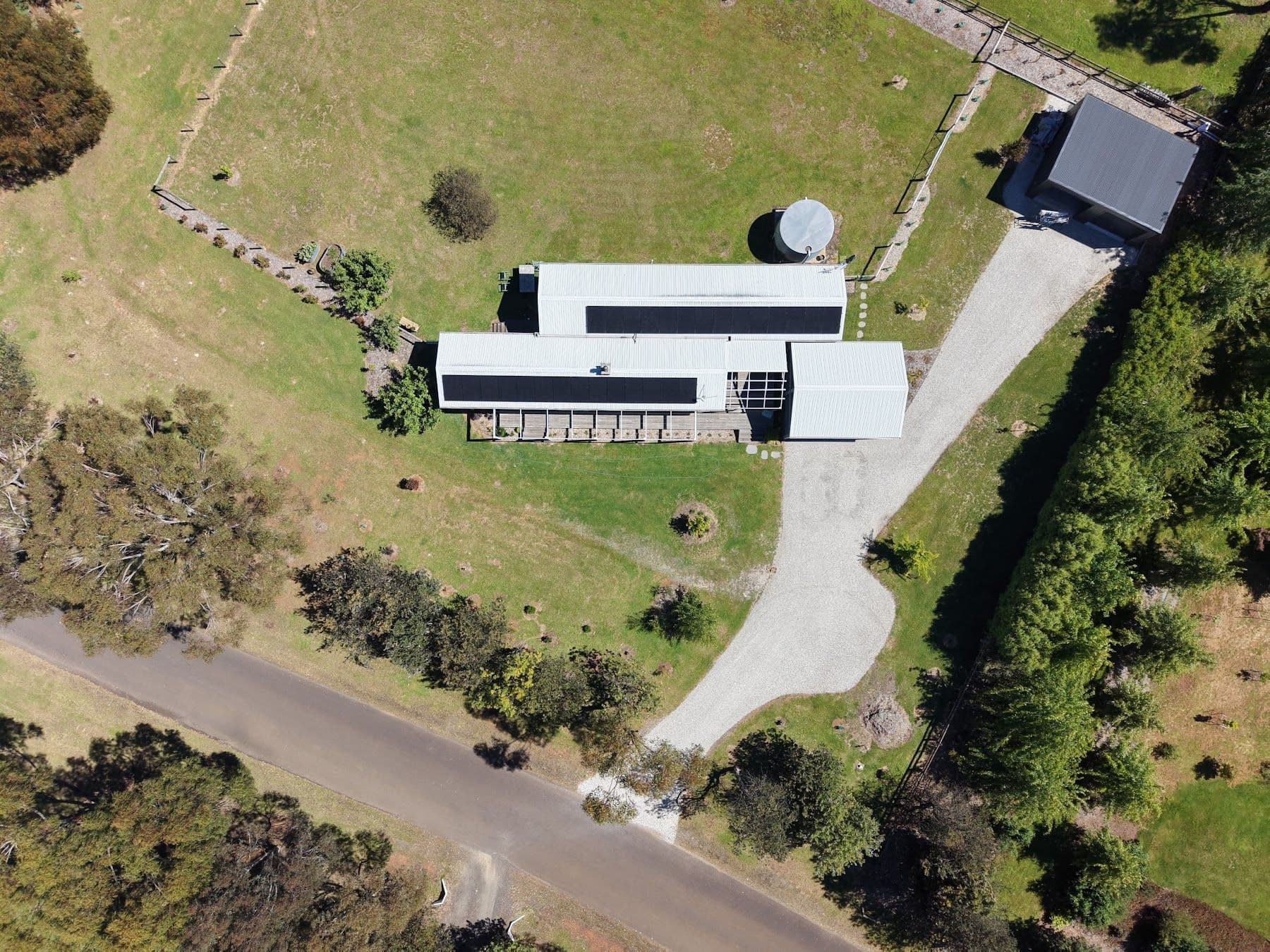
On a rural block in Gisborne South or Toolern Vale, the best place for solar is often not the house roof. A big north-facing shed, or a ground-mounted frame in a clear paddock, can give you more room and better sun than the house ever could. The trade-off is distance: the further the panels sit from your switchboard, the more the cabling, the network rules and the site itself start to shape the design.
First, find out which network you're on
This is one area where you shouldn't assume. Jemena names Gisborne South as the northern edge of the area it supplies, while Gisborne itself is on Powercor's network, so the boundary between the two is close by. Toolern Vale homeowners should check too. Your electricity bill names your distributor.
It matters because the rules differ:
- Jemena allows up to 10 kVA of inverter per phase under its basic connection, with exports capped at 5 kVA on a single-phase supply and 15 kVA on three phase.
- Powercor asks your installer to lodge a pre-approval through its eConnect portal before you sign, then sets your export limit after assessing local network capacity. Where that comes back at 0 kW, Powercor offers some customers a flexible exports connection allowing exports up to the inverter's capacity (to a maximum of 10 kW) most of the time.
On both networks, every new, upgraded or replacement system must be emergency backstop enabled, which has applied since 1 October 2024. The inverter has to stay online so the network can turn solar down in a rare grid emergency. On Jemena's network, an inverter that drops offline has its export limit cut to 0.5 kVA for the whole site.
That catches rural properties out. If the inverter lives in a shed well away from the house, the home wifi may not reach it, so a wired connection or a proper wireless link becomes part of the job.
Long cable runs
Australian standards cap the total voltage rise between the inverter and the grid connection point at 2 per cent of the nominal voltage. Every metre of cable adds to that rise, so a long run from a shed or a ground mount back to the meter usually needs heavier cable than a house install would. Skimp on it and the inverter can trip off on high voltage on sunny days, quietly throwing away generation.
Inverter placement is the other choice. Near the panels keeps the DC run short; near the switchboard keeps it close to the internet and any battery.
Shed roofs
A shed can make a great array, but look at it with fresh eyes first:
- Structure. Purlin spacing and the condition of the sheeting decide where brackets can go.
- Skylights and fragile sheets. WorkSafe Victoria has issued a safety alert after a worker was fatally injured falling through a shed roof. Fragile areas need to be identified and protected before anyone walks on it.
- Height. WorkSafe's falls rules apply to any fall risk above two metres, and that covers most shed roofs.
Ground mounts
A ground mount frees you from the roof's direction and pitch: panels can face true north at a sensible tilt and are easy to reach for cleaning. They also need more planning:
- Footings and frame engineered for the wind on your site. Racking makers design their ground mount systems against the wind standard, AS/NZS 1170.2, and an exposed paddock is a different case from a sheltered yard.
- Trenching for the cable back to the switchboard, with the right depth and protection for underground wiring.
- The surroundings. Livestock, machinery and long grass all need keeping away from the array. If your block is in a designated bushfire prone area, keeping the ground under and around the panels clear is simple common sense.
A free planning property report from VicPlan shows your zones, overlays and whether the block is in a bushfire prone area. It's worth reading before you settle on a spot.
Trees and shade
If your property has stands of established trees, expect long shadows in winter when the sun is low. Moving the array to clear sky is often better than fighting shade on the roof. Where some shade can't be avoided, panel-level electronics such as the SolarEdge optimisers in our Premium tier keep one shaded panel from pulling down the rest of its string.
Making the power count
From 1 July 2026, Time of Use is Powercor's default network tariff for properties connecting solar for the first time, with a cheap period from 11am to 4pm and a peak from 4pm to 9pm. Jemena's default residential time of use tariff uses the same two windows. Add Victoria's Midday Power Saver (free power from 11am to 2pm on a plan every retailer must offer, with a 24 kWh daily cap) and the absence of any minimum feed-in tariff since 30 June 2025, and the message is simple: use what you make, or store it for the evening.
Pumps, workshop gear and water heating are easy loads to move into the middle of the day. A battery covers the rest, with support from the federal Cheaper Home Batteries Program at 6.8 STCs per usable kWh until 31 December 2026.
Talk it through
We're based in New Gisborne, so these blocks are close to home. Every system we install is independently inspected by a licensed Electrical Inspector, and our mid and premium systems include remote fault monitoring, which is handy when the inverter is a paddock away. Talk to us about your shed, your paddock or your roof.
Michael John
Central Solar, New Gisborne