
Local · 30 October 2026 · 4 min read
Solar in Sunbury: designing for the Jemena network
Sunbury runs on Jemena's network, with its own export limits and new time of use tariffs. Here is how that changes a solar and battery design.
By Michael John, Central Solar
Sunbury is on Jemena's electricity network, not Powercor's, and that one detail changes how a solar system here should be sized. Jemena has its own export limits, its own approved inverter list and, from this year, its own tariff windows. A system designed for the rules on the other side of the boundary can end up throttled or poorly matched to how power is priced in Sunbury.
A busy patch of network
Jemena's own planning documents describe the Sunbury and Sydenham zone substations as supplying around 38,223 customers across a mix of rural land, established suburbs and new greenfield growth areas, Sunbury included. Jemena also reports that both substations are running at high utilisation, with forecasts showing continued pressure as the Sunbury and Diggers Rest growth corridor fills in.
For a homeowner the practical point is timing. Like most of the grid, the network here is under the most strain in the early evening, which is exactly when your panels have stopped producing.
What Jemena allows you to export
Under Jemena's basic connection, a home can install up to 10 kVA of inverter per phase. Exports are capped at 5 kVA for a single-phase home and 15 kVA for a three-phase home, with anything larger assessed case by case.
There is a catch worth knowing. Since 1 October 2024, new, upgraded and replacement systems in Victoria must be emergency backstop enabled, so the network can turn solar down in a rare grid emergency when the market operator directs it. Jemena requires the inverter to stay connected to the internet at all times. If it can't be reached, Jemena says the export limit drops from 5 kVA per phase to 0.5 kVA for the whole site. A flaky wifi signal in the garage is not a small thing.
So the inverter needs to be on the Clean Energy Council's CSIP-AUS compliant list, approved for Jemena's network, and mounted where your home internet reliably reaches it. That is worth checking before anyone picks a spot on the wall.
Sunbury's new tariff windows
Jemena's tariff structure for 2026 to 2031 sets a cheaper "solar soak" period from 11am to 4pm and a peak period from 4pm to 9pm on its default time of use tariff for new residential customers. Jemena also offers an opt-in export tariff that pays a credit for power exported between 4pm and 9pm and can charge for exports between 11am and 4pm, above a basic allowance.
Your retailer decides how those network charges reach your bill, and they won't suit every household. But the direction is unmistakable: midday power is plentiful and cheap, evening power is scarce and dear.
Add Victoria's Midday Power Saver, which from 1 October 2026 requires retailers to offer a plan with free power from 11am to 2pm (up to 24 kWh a day), and the end of any minimum feed-in tariff in Victoria from 30 June 2025. Selling lunchtime solar to the grid has never been worth less.
What that means for the design
With exports capped and midday power cheap, the panels you add beyond your export limit are mostly there to cover your own use: the morning routine, a dishwasher or pool pump moved to the middle of the day, and the start of evening cooking. A few panels facing west can stretch useful generation later into the afternoon, which helps on summer days when the air conditioner kicks in around 4pm.
The bigger shift comes from storage. A battery soaks up the midday surplus (or free grid power, on the right plan) and carries the house through the 4pm to 9pm window. On Jemena's opt-in export tariff, a battery with power to spare could even send some to the grid at peak time. Whether that suits you depends on your retail plan, so it's worth running the numbers before switching.
The federal Cheaper Home Batteries Program creates 6.8 STCs per usable kWh for batteries installed up to 31 December 2026, on a sliding scale above 14 kWh, falling to 5.7 per kWh from 1 January 2027. More on that on our home batteries page.
Old streets and new estates
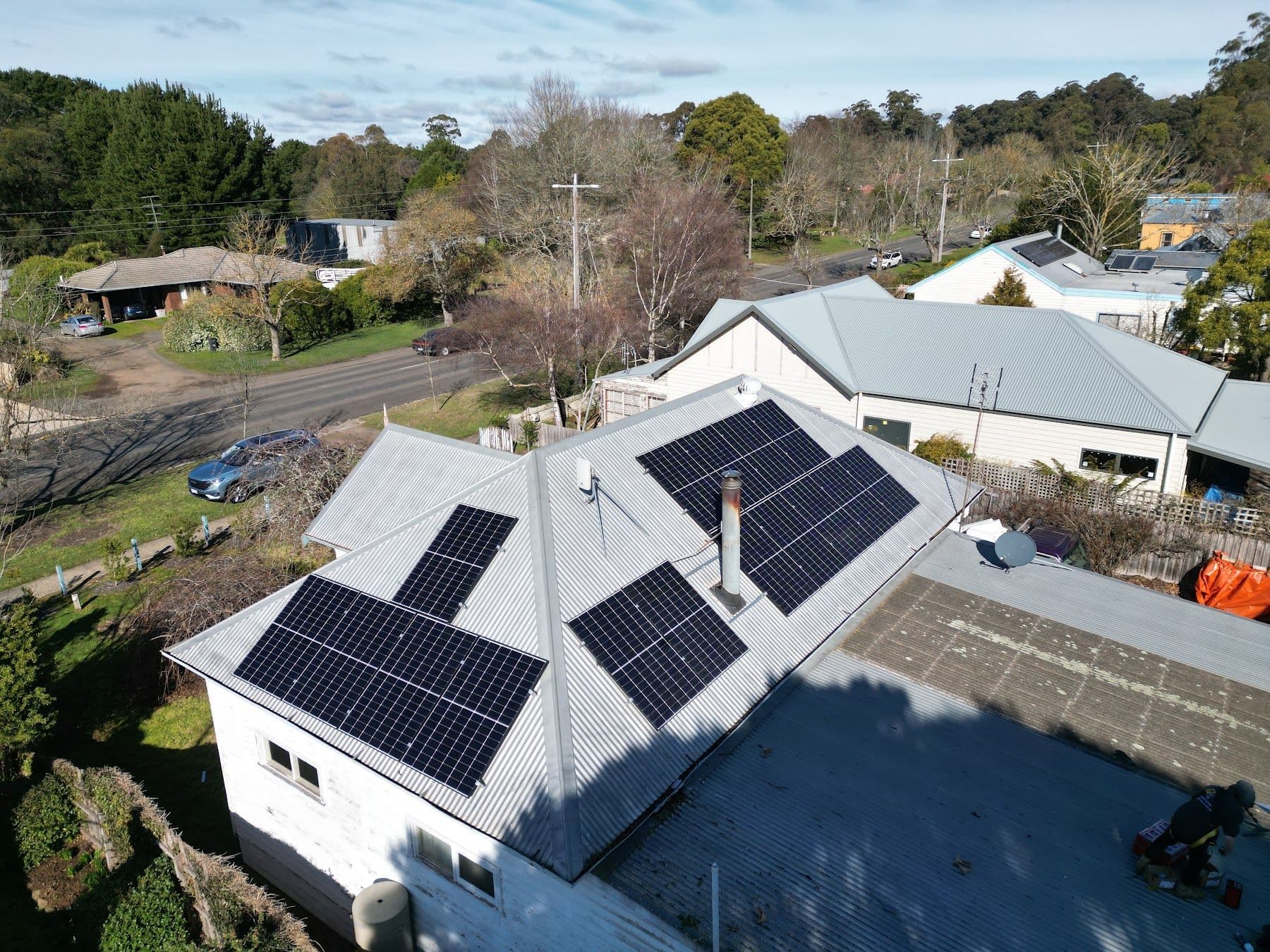
Sunbury has both long-established streets and brand new estates, and each brings its own issues. An older tiled roof may need tiles replaced as the brackets go in. A two storey roof needs edge protection under WorkSafe Victoria's rules for falls above two metres. A small roof with several faces may suit a split array, with panels on two or three planes, which works best with an inverter that handles more than one input or with panel-level electronics.
Local help
We're a short drive away in New Gisborne. Our installers are accredited through Solar Accreditation Australia, every system is independently inspected by a licensed Electrical Inspector, and we handle the rebates and paperwork.
Read more on our Sunbury page, or get a quote for a system sized to Jemena's rules and to the way your household uses power after dark.
Michael John
Central Solar, New Gisborne