
Local · 3 November 2026 · 5 min read
Solar and batteries in Gisborne and New Gisborne
Cool air, short winter days, Powercor's rules and this year's new tariffs. What actually shapes a good solar and battery system in Gisborne.
By Michael John, Central Solar
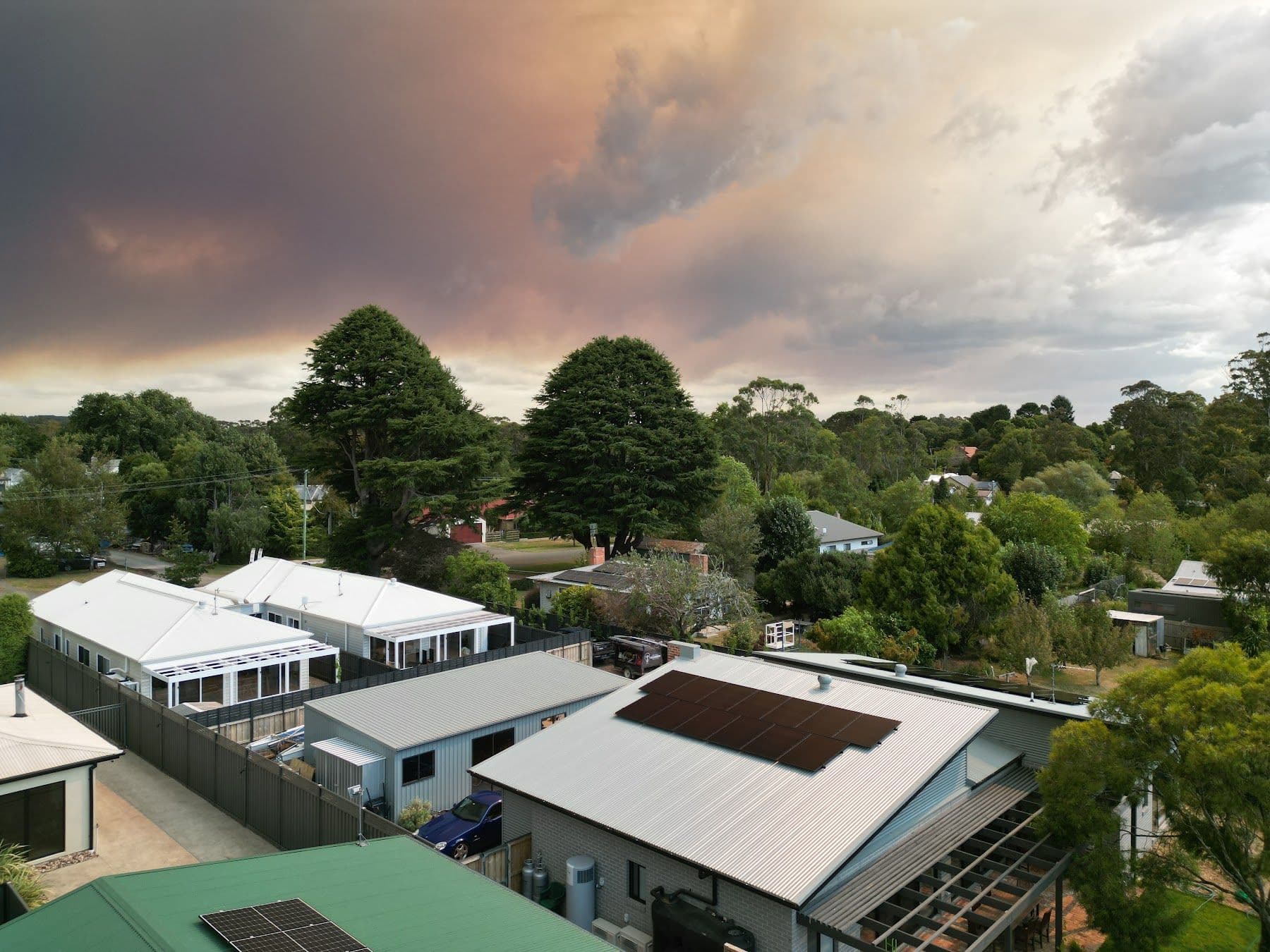
Gisborne is a cool town on Powercor's network, and those two facts shape a good solar design here more than any brochure does. Panels like the cold, winter days are short, and the evening is when most homes draw the most power. So the real question for a Gisborne home is not how much it can send to the grid, but how much of its own power it can use.
Cool air suits panels
Solar panels lose output as they heat up. Jinko's Tiger Neo datasheet, for example, lists a loss of about 0.30 per cent of power for every degree the cells run above 25°C. Cells sit well above the air temperature in full sun (the same datasheet rates the panel at a nominal 45°C cell temperature on a mild 20°C day), so a hot afternoon costs real output.
That works in Gisborne's favour. A crisp, clear spring morning is close to ideal for a panel, and every mild day instead of a scorcher is output you keep.
Winter is the other side of the ledger. The sun sits low and the days are short, so a north-facing roof matters most here, and shade matters more than people expect. A tree or a neighbour's second storey that clears your roof in December can throw a long shadow across it in June. Any quote worth having should look at shade across the whole year, not just on the day someone climbs the ladder.
Who looks after the poles and wires
Gisborne and New Gisborne are on Powercor's network (Powercor runs the zone substation at Gisborne). Your bill names your distributor if you want to be sure.
Powercor asks your installer to lodge a solar pre-approval through its eConnect portal before you sign a contract. Powercor then assesses how much spare capacity the local network has and sets your export limit. Basic applications are approved for installation, but limits may be placed on exports, so the answer can differ from one street to the next.
Two more rules apply to every new, upgraded or replacement system:
- Since October 2024, Victoria's emergency backstop applies. The inverter must stay connected to the internet so the network can turn solar down in a rare grid emergency, and it must be on Powercor's list of approved, onboarded inverters.
- If your pre-approval comes back at 0 kW, Powercor now offers some customers a flexible exports connection instead. That lets you export up to your inverter's capacity (to a maximum of 10 kW) most of the time. In Powercor's 12-month trial, participants exported freely more than 90 per cent of the time.
The tariffs changed this year
From 1 July 2026, Time of Use became Powercor's default network tariff for new connections and for homes connecting solar for the first time. It has three windows: a cheap Saver period from 11am to 4pm, Peak from 4pm to 9pm, and Off-Peak from 9pm to 11am. Your retailer decides how that flows into your plan, but the pattern is clear: midday power is cheap, evening power is dear.
On top of that, Victoria's Midday Power Saver requires retailers to offer a plan with free power from 11am to 2pm (with a 24 kWh a day fair use cap) from 1 October 2026. And there has been no minimum feed-in tariff in Victoria since 30 June 2025.
Put together, a kilowatt-hour exported at lunchtime is worth very little, and a kilowatt-hour used at 7pm is worth a lot. That is why a good design here starts with what your household does after dark.
Where a battery fits in a cold town
Gisborne winter evenings are cold, and a home that heats with a reverse cycle system or other electric heating does most of that after the sun has gone. In June, panels alone may not fill a battery. A plan with free power from 11am to 2pm can top it up in those three hours, so the battery still earns its place on grey days.
The federal Cheaper Home Batteries Program helps with the cost. For batteries installed up to 31 December 2026 it creates 6.8 STCs per usable kWh (100 per cent of that for the first 14 kWh, 60 per cent from 14 to 28 kWh, and 15 per cent from 28 to 50 kWh). From 1 January 2027 it drops to 5.7 per kWh. Solar Victoria's solar panel rebate is also still open, at up to $1,400 with an optional interest-free loan of up to $1,400 for eligible households. Our rebates page has the detail.
Older streets and newer estates
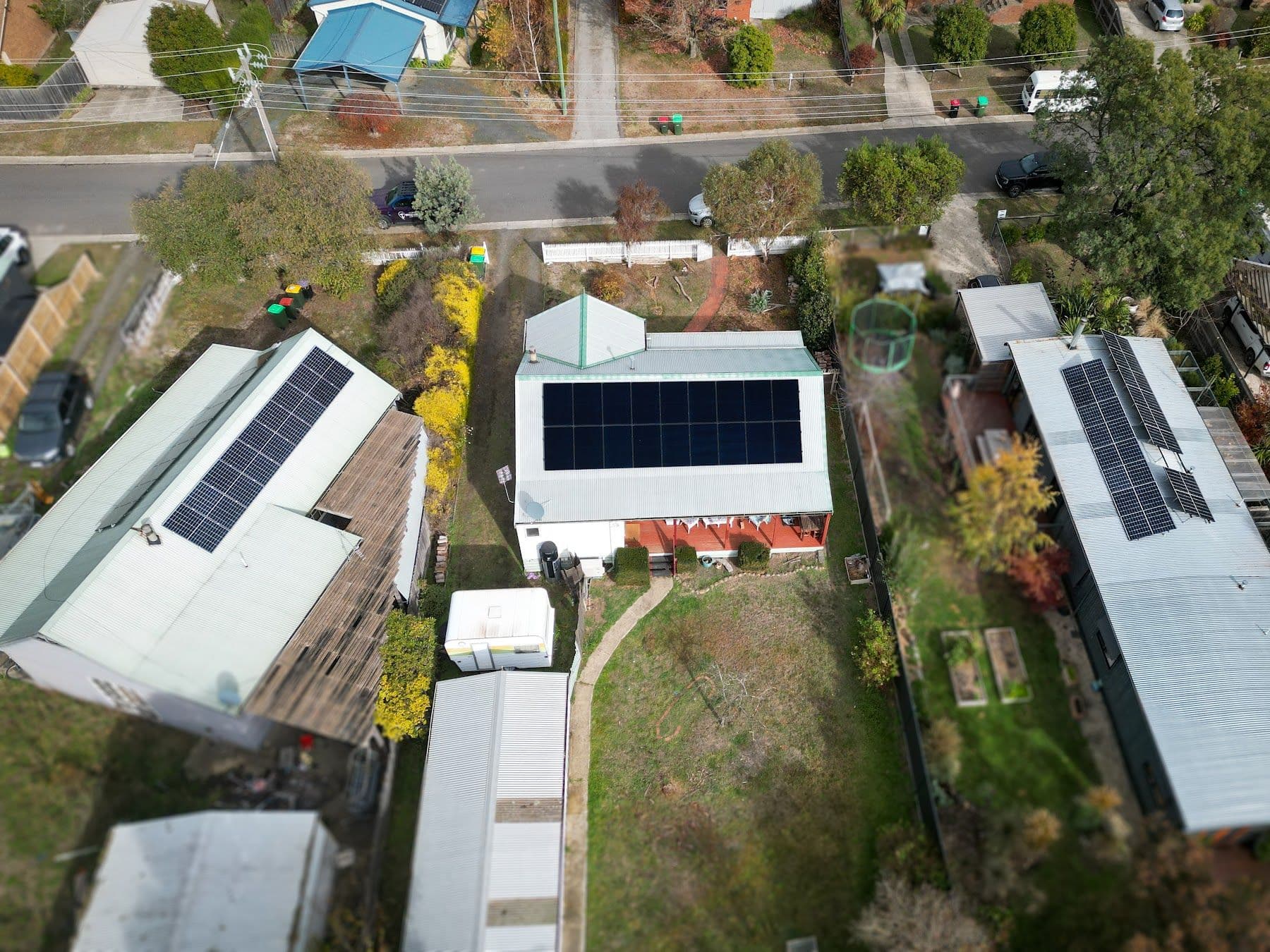
Gisborne has a bit of everything. In established streets with big trees, shade that can't be avoided is better handled with panel-level electronics, such as the SolarEdge optimisers in our Premium tier, so one shaded panel doesn't drag the rest down. In the newer estates around New Gisborne, roofs are often smaller and two storeys high. Working at that height means proper edge protection under WorkSafe Victoria's falls rules, which apply to any fall risk above two metres.
Close to home
We're based at 2/7 Pioneer Way in New Gisborne. Our installers are accredited through Solar Accreditation Australia, the scheme the Clean Energy Council used to run, and every system we install is independently inspected by a licensed Electrical Inspector. We handle the rebates and paperwork.
See how we work locally on our Gisborne page, or get a quote for a system designed around your roof, your shade and your evenings.
Michael John
Central Solar, New Gisborne