
Quality · 20 October 2026 · 4 min read
Solar installer accreditation explained, from CEC to SAA
Quotes still say CEC accredited, but Solar Accreditation Australia now runs the scheme. What that means and why your rebates depend on it.
By Michael John, Central Solar
If you have collected a few solar quotes, you have probably seen "CEC accredited" on most of them. The phrase is still everywhere, but the scheme behind it changed hands in 2024. Here is who accredits solar installers now, what the separate retailer code covers, and why both decide which rebates you can claim.
From the Clean Energy Council to Solar Accreditation Australia
For years the Clean Energy Council (CEC), the industry's peak body, ran the accreditation scheme for solar installers and designers. That is where "CEC accredited" comes from.
On 29 February 2024, the Clean Energy Regulator approved Solar Accreditation Australia (SAA) as the new accreditation scheme operator for installers and designers under the Small-scale Renewable Energy Scheme. The CEC did not apply to keep the role. Accredited installers and designers then had three months to move across to SAA to stay eligible for STCs, a window that closed on 29 May 2024.
So when you see "CEC accredited" on a quote today, read it as shorthand. What counts is that the person installing your system holds current SAA accreditation.
What accreditation actually means
Accreditation sits on top of an electrician's licence. It shows the electrician has been trained and assessed in designing and installing solar to the Australian standards. The Clean Energy Regulator says installers and designers must be accredited by SAA and licensed in order to design or install solar or battery systems and claim STCs, and that accredited installers also need an unrestricted electrical licence in their state or territory.
Batteries have a requirement of their own. The regulator says a solar battery must be installed by, or under the on site supervision of, an installer with SAA battery accreditation.
Installer accreditation belongs to a person, not a business. A company can't hold it on behalf of whoever it sends to your roof, so it is fair to ask for the name of the accredited installer on your job and look them up on SAA's installer search.
The installer has to be there
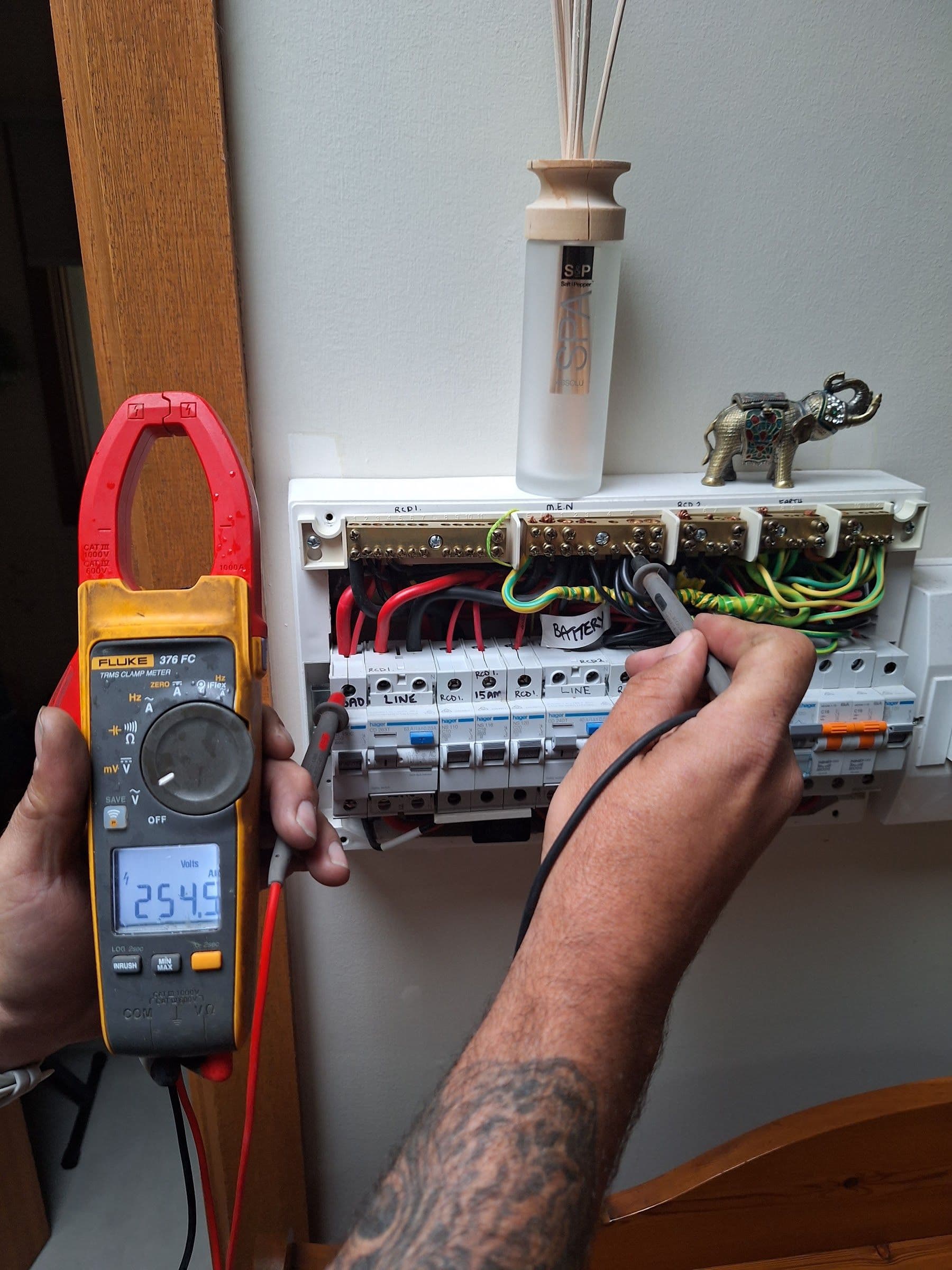
For a system to earn STCs, the regulator requires the accredited installer to complete or supervise the installation, and to attend the site for the job set up, a check part way through, and testing and commissioning, taking photos of themselves on site as evidence. It is a practical rule that makes "supervised" mean something.
The retailer code: approved sellers
Accreditation covers the person doing the work. The company selling you the system is covered by something else.
The CEC's old Approved Solar Retailer program was replaced in 2023 by the New Energy Tech Consumer Code, and existing approved retailers moved across automatically. Businesses that sign up and are approved become New Energy Tech Approved Sellers, which commits them to standards on how they sell and how they look after customers after the sale. The CEC administers the code and takes complaints about approved sellers.
Joining is voluntary nationally. In Victoria, though, Solar Victoria requires solar and battery retailers to hold Approved Seller status to stay authorised under its programs.
Why it decides your rebates
Two separate incentives depend on accreditation.
STCs. The federal Small-scale Renewable Energy Scheme creates small-scale technology certificates for eligible solar and battery systems, and their value is usually taken straight off your price. The Clean Energy Regulator only allows them where the system was designed and installed by SAA accredited people. Batteries joined the scheme under the Cheaper Home Batteries Program from 1 July 2025. For batteries installed from 1 May to 31 December 2026, the calculation is 6.8 STCs per usable kWh, with the full rate on the first 14 kWh and reduced rates above that.
Solar Victoria. The state's solar panel rebate offers eligible households up to $1,400, plus an optional interest-free loan of up to $1,400. Eligibility includes a combined household taxable income under $150,000 and a property valued under $3 million, and the system must be installed by an authorised installer, sold by an authorised retailer and built from eligible products.
What to check before you sign
- The installer's SAA accreditation, including battery accreditation if a battery is part of the job.
- The retailer's New Energy Tech Approved Seller status.
- That the retailer is authorised with Solar Victoria, if you're claiming the state rebate.
- That the quote names the exact products and shows the STC discount.
- That your Solar Victoria eligibility is approved before installation day, because Solar Victoria says a system installed before approval won't receive a rebate.
Where we stand
Central Solar's installers are accredited through Solar Accreditation Australia, and we handle the rebate and STC paperwork for you. To see which incentives apply to your home, have a look at our rebates page.
Michael John
Central Solar, New Gisborne