
Local · 18 October 2026 · 5 min read
Solar and batteries for hot summers in Melton and Melton South
Heat, late afternoon air conditioning and new estate homes. How to design solar and a battery that keep up with a Melton summer.
By Michael John, Central Solar
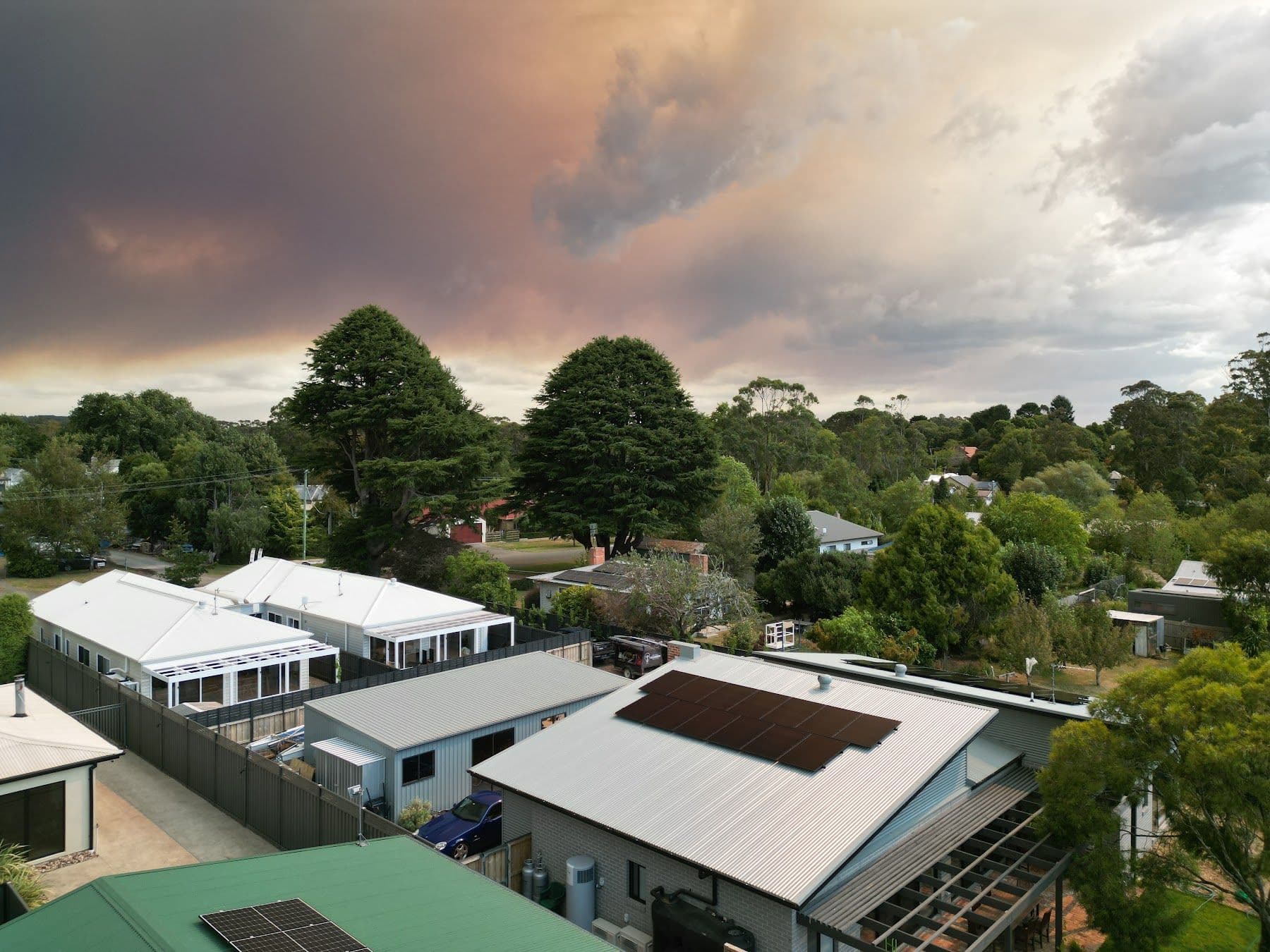
A Melton summer asks two things of a solar system. The panels have to keep producing while the roof bakes, and the house needs power most in the late afternoon and evening, just as the panels fade and the air conditioner works hardest. A system built for a Melton or Melton South home should be designed around that gap, not just around how many panels fit on the roof.
Heat costs output
Solar panels produce less as they get hotter. Jinko's Tiger Neo datasheet, as one example, lists a loss of about 0.30 per cent of power for every degree the cells run above 25°C, and rates the cells at a nominal 45°C on a mild 20°C day in moderate sun. On a hot, still summer afternoon the cells run hotter again, so some of the theoretical output never arrives.
You can't change the weather, but a few choices help:
- Airflow under the panels. Standard railed mounting leaves a gap between the panels and the roof, which lets heat escape. Panels shouldn't be packed hard against a hot roof surface.
- Panels with a low temperature coefficient. Every datasheet lists this figure, and the smaller it is, the less the panel gives up in the heat. It's worth comparing.
- Inverter placement. Most inverters protect themselves by reducing output when they get too hot. A shaded, ventilated wall beats a west-facing wall in full afternoon sun.
The 4pm problem
Powercor supplies Melton and Melton South. From 1 July 2026, Time of Use became Powercor's default network tariff for new connections and for homes connecting solar for the first time. It has a cheap Saver period from 11am to 4pm, Peak from 4pm to 9pm, and Off-Peak from 9pm to 11am. Powercor explains it plainly: rooftop solar floods the network between 11am and 4pm, and demand is highest between 4pm and 9pm, especially in summer and winter.
That lines up almost exactly with a hot day in Melton. Your panels are flat out at lunchtime, when power is cheap. Your air conditioner is flat out after 4pm, when power is dear.
There are three good ways to close that gap:
- Point some panels west. A west-facing section of roof produces less across the whole day than north, but more of it arrives late in the afternoon when the cooling load builds.
- Pre-cool the house. Running the air conditioner harder in the early afternoon, while your panels are producing and power is cheap, means less work after 4pm. Victoria's Midday Power Saver also requires retailers to offer a plan with free power from 11am to 2pm (with a 24 kWh daily fair use cap), which suits this nicely.
- Add a battery. Store the midday surplus and use it to run the house through the evening peak.
With no minimum feed-in tariff in Victoria since 30 June 2025, sending lunchtime power to the grid earns very little. Using it, or storing it, is where the value is.
A tariff built for batteries
Powercor also introduced a Consumer Energy Resource network tariff from 1 July 2026, aimed at homes with batteries or vehicle-to-grid capable cars. It keeps the cheap 11am to 4pm Saver period, adds a network credit of about 7.7 cents per kWh for exports between 4pm and 9pm in summer and winter, and charges about 1.1 cents per kWh for exports between 11am and 4pm in spring, summer and autumn.
These are network charges, not retail prices, and your retailer decides how to pass them on. But for a household with a battery, the shape is promising: charge in the middle of the day, use or export in the evening.
New estate homes
If you're in one of the newer estates, your home has its own considerations. Since 1 May 2024, new homes in Victoria have had to meet a 7-star energy rating and a Whole of Home energy budget covering fixed appliances such as heating, cooling, hot water and lighting (with a transition period for some projects). A better-sealed, better-insulated home holds its cool longer, which makes pre-cooling work even better.
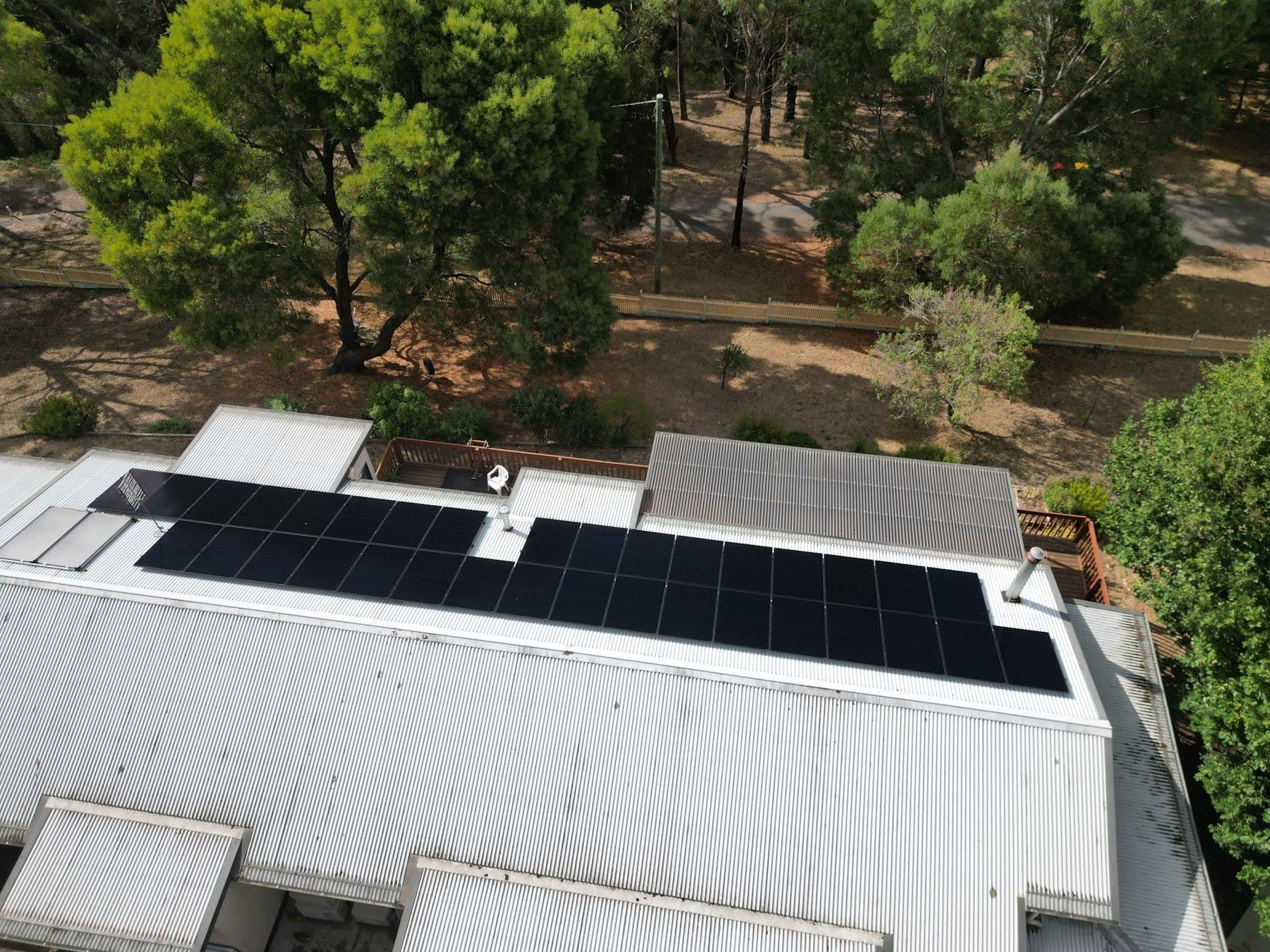
Estate roofs are often split into several smaller faces, and many homes are two storey. That can mean panels on two or three planes and an inverter that handles more than one input. Working on a second storey roof also means edge protection under WorkSafe Victoria's falls rules, which apply to any fall risk above two metres.
The garage is the usual spot for a battery. Every battery has an operating temperature range on its datasheet, so a wall that bakes on summer afternoons is best avoided.
Help with the cost
The federal Cheaper Home Batteries Program creates 6.8 STCs per usable kWh for batteries installed up to 31 December 2026 (full value for the first 14 kWh, then sliding), falling to 5.7 per kWh from 1 January 2027. Solar Victoria's solar panel rebate also remains open to eligible households, at up to $1,400 with an optional interest-free loan of up to $1,400. See our rebates page for eligibility.
From New Gisborne
We're a local business based in New Gisborne. Our installers are accredited through Solar Accreditation Australia, every system is independently inspected by a licensed Electrical Inspector, and we handle the rebates and paperwork. Our Balanced tier (Sungrow, Sigenergy or iStore) and Premium tier both come with remote fault monitoring, so a fault in the middle of a heatwave doesn't go unnoticed.
Have a look at our home batteries page, or get a quote for a system that keeps up with a Melton summer.
Michael John
Central Solar, New Gisborne