

Equipment · 31 October 2026 · 4 min read
Hybrid inverter or AC-coupled battery? How to add storage
Two ways to add a home battery, with or without solar already on the roof. What each one does, where each fits, and the questions to ask first.
By Michael John, Central Solar
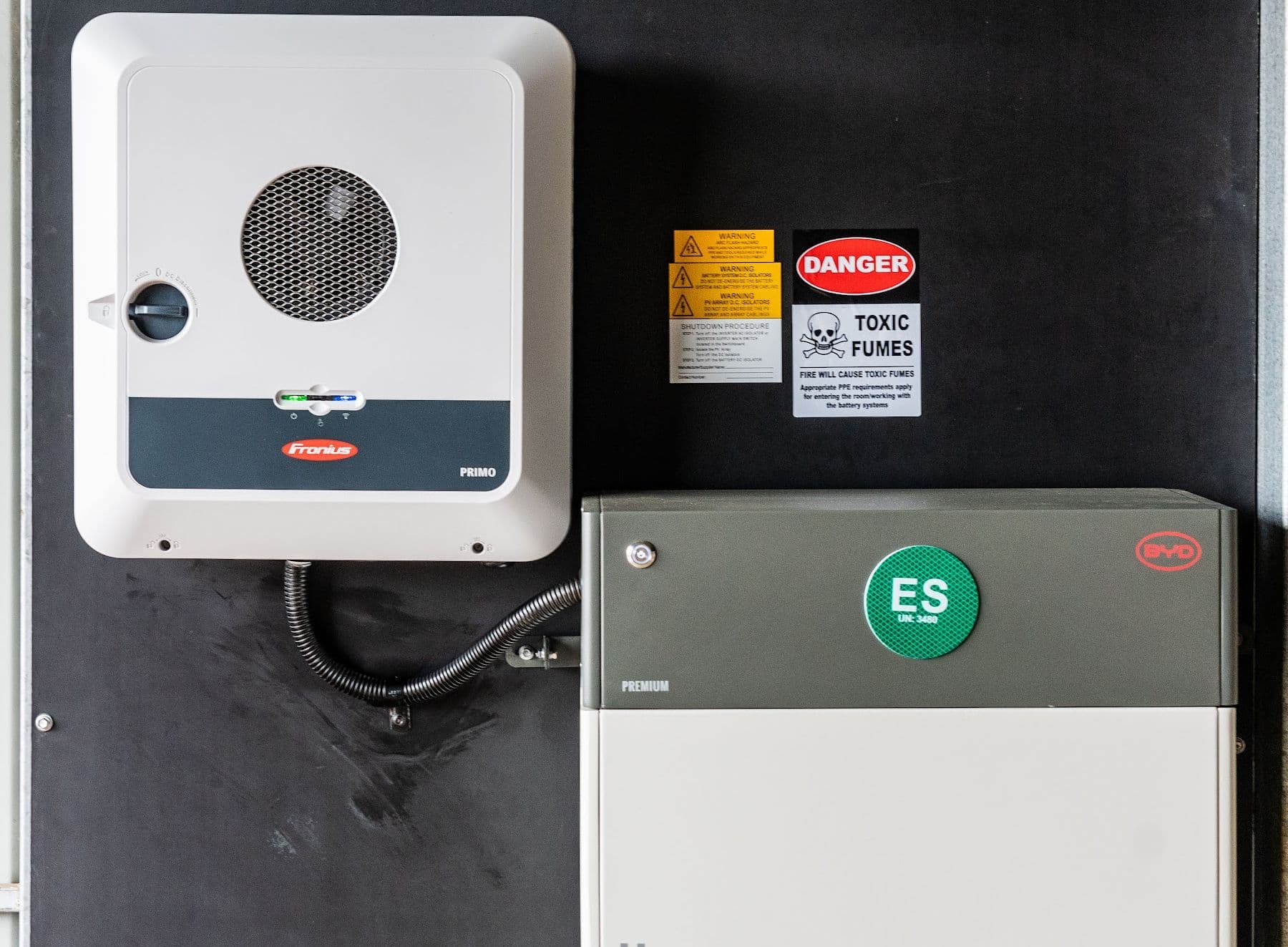
There are two main ways to put a battery into a grid-connected home. A hybrid inverter runs your panels and your battery from one box. An AC-coupled battery brings its own inverter and sits alongside whatever solar inverter you already have. Neither is better in every house. The right one depends mostly on what is on your wall today.
What a hybrid inverter does
Solar panels make direct current (DC). Your home runs on alternating current (AC). An ordinary solar inverter turns one into the other and that is all it does.
A hybrid inverter adds a battery connection to the same unit. Power from the panels can go straight into the battery as DC, without being turned into AC first, and the inverter then converts it once when the house needs it. One inverter, one app, one set of settings, and less hardware on the wall.
Fronius's GEN24 Plus is a good example of how far a hybrid can go. With a compatible battery it offers PV Point, a single socket for loads up to 3 kW during a blackout, or Full Backup, which supplies the whole house and needs the battery plus a Fronius Smart Meter. Other brands handle backup in their own way, so check the exact model rather than assuming every hybrid backs up the whole home.
What an AC-coupled battery does
An AC-coupled battery has its own inverter built in or paired with it, and it connects on the AC side at your switchboard. Your existing solar inverter keeps doing its job. When the panels make more than the house is using, that surplus (already converted to AC) is turned back into DC to charge the battery, then back to AC again in the evening.
That extra round of conversion is the trade-off. Each step loses a little energy, so AC coupling usually stores slightly less of your solar than a hybrid would. In return, it leaves a working solar system untouched.
A third way: keep the old inverter and add a hybrid
There is a middle path that often gets missed. You can fit a hybrid inverter with a battery and leave your existing solar inverter in place, wired into the hybrid's AC side. Sungrow's manuals for its SH hybrid range describe exactly this setup, with power from the existing inverter going to the house first and then into the battery. Their rule is worth knowing: the existing inverter's rating cannot be larger than the hybrid's. It also gives you a spot for extra panels on the new inverter, if your roof and the network allow it.
If you are starting from scratch
For a home with no solar yet, or one replacing an old system completely, a hybrid inverter is usually the tidy answer. You buy one inverter instead of two, the battery can be added on day one or later, and everything reports to one monitoring app. If you are not ready for a battery yet, ask whether the inverter you are quoted is a hybrid model. Choosing one now keeps the door open.
If you already have solar
Here the questions change:
- How old is your inverter, and is it still under warranty? Replacing a sound, young inverter just to fit a battery is hard to justify. An inverter near the end of its life is a different story.
- Is it already a hybrid? Some systems sold as "battery ready" have a hybrid inverter waiting for a compatible battery. Check the model number against the manufacturer's battery list, because not every battery works with every hybrid.
- How big is the existing system? A small array may not fill a large battery on winter days, whichever way it is connected.
- Do you want backup? Some setups give you whole-home backup, some a few circuits, some none. Decide what you need to keep running before you compare quotes.
The rebate does not care which way you go
The federal Cheaper Home Batteries Program applies to batteries connected to new or existing solar, and to systems from 5 kWh to 100 kWh of nominal capacity. The discount is based on the battery's usable capacity and its install date, not on whether it is AC or DC coupled. The battery has to be on the Clean Energy Council's approved list and installed by someone accredited through Solar Accreditation Australia. Your electricity distributor also has to approve the connection before anything goes on the wall.
How this fits our range
Across our three tiers we work with Fronius and SolarEdge (Premium), Sungrow, Sigenergy and iStore (Balanced), and GoodWe, Growatt and Solis (Essential). Every system we install is inspected by an independent licensed Electrical Inspector, and we handle the rebate and network paperwork. If you already have solar, a photo of your inverter's label is the fastest way for us to tell you which path makes sense.
Our home batteries page has more on the batteries we fit, and it is a good place to start before you send us that photo.
Michael John
Central Solar, New Gisborne