
Jinko · 1 November 2026 · 4 min read
Jinko Tiger Neo 3.0 on a Victorian roof: what is new
Jinko's Tiger Neo 3.0 range explained for homeowners: the 48-cell rooftop panels, how they handle heat, the warranty, and where the new 5.0 fits.
By Michael John, Central Solar
Tiger Neo 3.0 is the generation of Jinko panels going onto Australian homes right now, and the part of the range that matters for a house is not the one in the headlines. The record numbers you may have read (670 watts, 24.8% efficiency) belong to a large 66-cell module built for solar farms. On a home roof, the panels to look at are the 48-cell versions, and they are a solid step forward in their own right.
The rooftop panels in the 3.0 range
Jinko's Australian brochure lists five modules in the Tiger Neo 3.0 range. Two are sized for houses:
- 48QL6-DB: the all-black version, with a black frame and black backing so the array reads as one dark surface.
- 48QL6-DV: the same cell layout with a standard look.
Both measure 1,762 by 1,134 mm, which is close to two square metres a panel. Jinko's Australian datasheets list the all-black version from 450 to 475 watts and the standard version from 450 to 480 watts, with module efficiency up to 23.77% and 24.02% respectively. The all-black panel weighs 24.4 kg because it uses 2.0 mm glass on both faces.
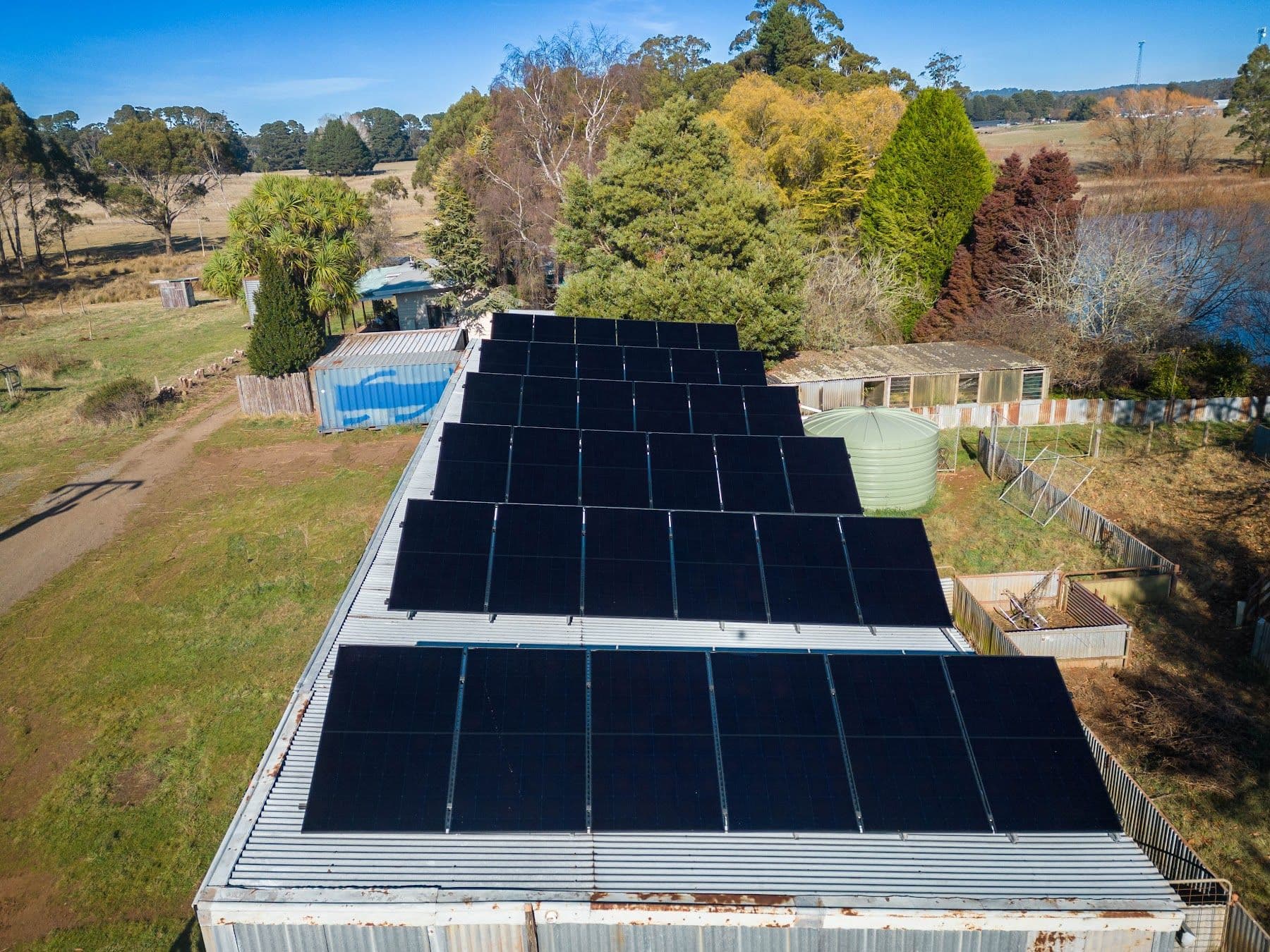
What does that mean on a roof? Twenty of the 475 watt panels make a 9.5 kW array in roughly 40 square metres. On a home where the useful north face is the limiting factor, more watts in the same footprint is the main practical gain.
Built for heat
Every solar panel loses output as it warms up. The figure that tells you how much is the temperature coefficient, and Jinko rates the 3.0 range at 0.26% per degree Celsius above 25°C. That is the same figure Jinko quotes for its flagship 3.0 module, and Jinko says that in most locations the better heat handling works out to 1.5% to 1.7% more energy across a year.
For a Victorian home that sees a run of hot summer afternoons, the coefficient matters more than a fraction of a percent in the efficiency rating. A panel that gives up less in the heat keeps working harder through the part of the year when air conditioners are running.
Low light and grey days
Jinko publishes a low light performance index of 96.77% for the 3.0 range at 200 watts per square metre, a light level more like an overcast morning than a clear midday. In plain terms, the panel holds its efficiency well when the sun is weak. That suits a southern state where winter days are short and often cloudy.
Bifacial: mostly a solar farm feature
You will see "85% bifaciality" in Jinko's material for Tiger Neo 3.0. A bifacial panel collects light on its back as well as its front. That pays off on solar farms, where panels sit high above pale ground and reflected light reaches the rear.
On a house, panels sit close to the roof and very little light reaches the back. That is why both 48-cell rooftop versions are listed as mono-facial with dual glass. They keep the toughness of glass on both sides without paying for a rear face that would barely work. If a quote leans on bifacial gains for a flush mounted home system, ask how much rear light the installer expects to reach the panels.
Strength and warranty
The all-black 48QL6-DB datasheet lists test loads of 5,400 Pa on the front and 2,400 Pa on the rear, the static loads it is certified to withstand in testing.
Jinko's Australian limited warranty dated August 2026 sets out the terms for the 48QL6 models:
- 25-year product warranty against defects in materials and workmanship.
- 30-year power warranty, with no more than 1% loss in the first year and 0.35% a year after that.
- At least 88.85% of rated output at the end of year 30.
One caution: the same document lists other Tiger Neo models with 12 or 15 year product warranties. The model code on your quote is what decides your cover, so check it rather than relying on the brand name.
What about Tiger Neo 5.0?
Jinko unveiled Tiger Neo 5.0 on 17 October 2026. The home version is an all-black 48-cell panel of the same size, rated up to 510 watts and 25.52% efficiency, with a temperature coefficient of 0.24% per degree. It uses a new cell design Jinko calls TAC, and Jinko Australia has already posted a datasheet for it.
Jinko had not announced commercial availability or pricing for the new module when it was unveiled. For now, Tiger Neo 3.0 is the generation you can actually order for a roof, and it is a mature, well documented product. When 5.0 is on Australian shelves with its warranty published, it will be worth a look for small roofs where every watt counts.
The short version
Tiger Neo 3.0 on a house means more output from the same roof space, less loss in summer heat, steady performance in weak light and a long written warranty, provided the exact model is one of the 25-year ones.
Central Solar fits all-black panels on every tier with a 25-year panel warranty. If you would like to see how many panels your roof can take, get a quote and we will lay it out for you.
Michael John
Central Solar, New Gisborne