

Solar news · 25 October 2026 · 4 min read
The battery rebate steps down on 1 January 2027
From 1 January 2027 the federal battery discount drops from 6.8 to 5.7 certificates per usable kWh. What that means in certificates for common battery sizes.
By Michael John, Central Solar
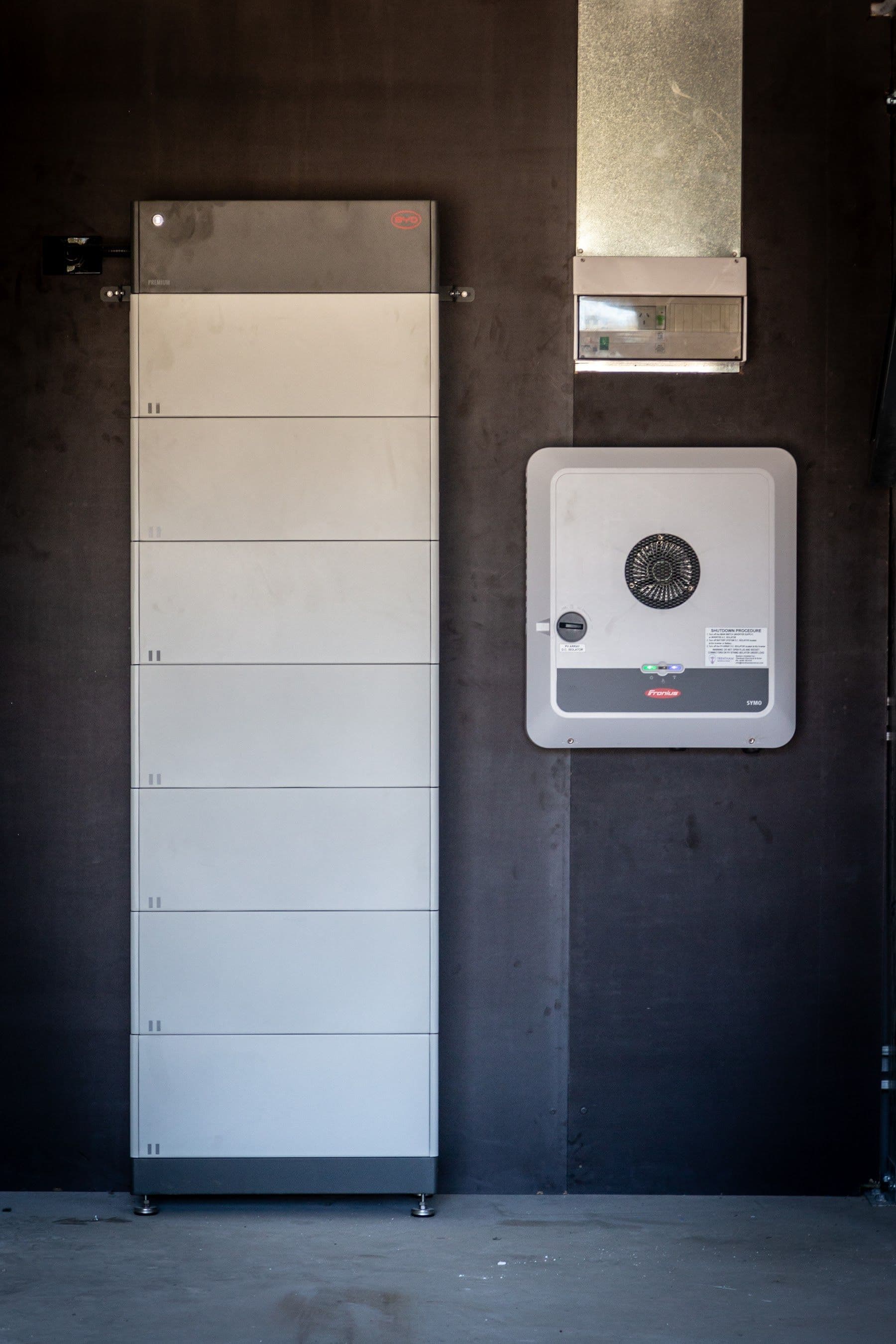
The federal discount on home batteries gets smaller on 1 January 2027. Under the Cheaper Home Batteries Program, a battery installed from that date earns 5.7 small-scale technology certificates (STCs) per kilowatt-hour of usable capacity, down from 6.8 for batteries installed between 1 May and 31 December 2026. The certificate count for a given battery falls by about a sixth. Here is how it works and what it means for typical sizes.
How the discount is worked out
The discount is not a fixed dollar amount. It is a number of certificates, which your installer usually takes in exchange for a lower price, then sells. Two things set the number of certificates:
- The battery's usable capacity, the energy it can actually deliver, rather than the bigger nominal figure on the box.
- The STC factor that applies on the day the battery is installed. Not the day you got the quote, and not the day you paid the deposit.
The factor is then tapered by size:
- The first 14 kWh of usable capacity counts at 100% of the factor.
- Every kWh above 14 and up to 28 kWh counts at 60%.
- Every kWh above 28 and up to 50 kWh counts at 15%.
- Nothing above 50 kWh of usable capacity earns certificates.
Batteries from 5 kWh to 100 kWh of nominal capacity are eligible, and a part certificate is rounded down to a whole one.
The step down in certificates
Here is the same battery installed either side of New Year.
A 10 kWh usable battery
- Installed in 2026: 10 × 6.8 = 68 STCs
- Installed from 1 January 2027: 10 × 5.7 = 57 STCs
- Difference: 11 certificates
A 20 kWh usable battery
- 2026: (14 × 6.8) + (6 × 6.8 × 60%) = 95.2 + 24.48 = 119.68, so 119 STCs
- 2027: (14 × 5.7) + (6 × 5.7 × 60%) = 79.8 + 20.52 = 100.32, so 100 STCs
- Difference: 19 certificates
A 32 kWh usable battery
- 2026: 95.2 + (14 × 6.8 × 60%) + (4 × 6.8 × 15%) = 95.2 + 57.12 + 4.08 = 156.4, so 156 STCs
- 2027: 79.8 + (14 × 5.7 × 60%) + (4 × 5.7 × 15%) = 79.8 + 47.88 + 3.42 = 131.1, so 131 STCs
- Difference: 25 certificates
Notice how little the capacity above 28 kWh earns either way. The department's reasoning is that each extra kWh gets cheaper as batteries get bigger, so it needs less help.
What a certificate is worth
This is where people get caught out. The government's STC Clearing House buys and sells certificates at a fixed $40 each, excluding GST, and the government buys certificates there to match the number created for batteries. But certificates can also be sold on the open market, where the price moves with supply and demand, and your installer may charge fees for handling them.
So the honest way to read the numbers above is in certificates. At the $40 Clearing House price, the 11 fewer certificates on a 10 kWh battery would be worth $440 before GST. What it means on your quote depends on the price your installer gets for certificates at the time, which is why a good quote shows the certificate count and the value applied, not just a discount figure.
It keeps stepping down
The New Year change is the first of several. The government's published schedule has the factor falling every six months:
- January to June 2027: 5.7
- July to December 2027: 5.2
- January to June 2028: 4.6
- July to December 2028: 4.1
The schedule continues down to 2.1 in the second half of 2030. The aim, according to the department, is to keep the discount at around 30% of the cost of a battery as battery prices fall.
Should you rush before Christmas?
If you have already decided on a battery and the install can be done properly before 31 December, the 2026 factor gives you more certificates. But do not let a date push you into the wrong size or a rushed job. The department itself warns that bigger is not always better, and that a battery too large for your solar or your inverter limits the benefit. Installer diaries also fill up late in the year, and it is the install date that counts.
If you are adding to a battery you already have, the extra capacity can qualify too, provided the existing battery has not already received the discount and you are adding at least 5 kWh.
How we handle it
Our installers are accredited under the scheme now run by Solar Accreditation Australia, and we look after the certificate paperwork. Each install is checked by an independent licensed Electrical Inspector.
For the full picture of what you can claim, state and federal, see our rebates page.
Michael John
Central Solar, New Gisborne